
Best Documentary Short Film: Ranking Every Nominee of the 98th Academy Awards
Written by Andreas Babiolakis
Welcome to another year of the Academy Awards Project here on Films Fatale! We rank all of the nominees in each category every day.
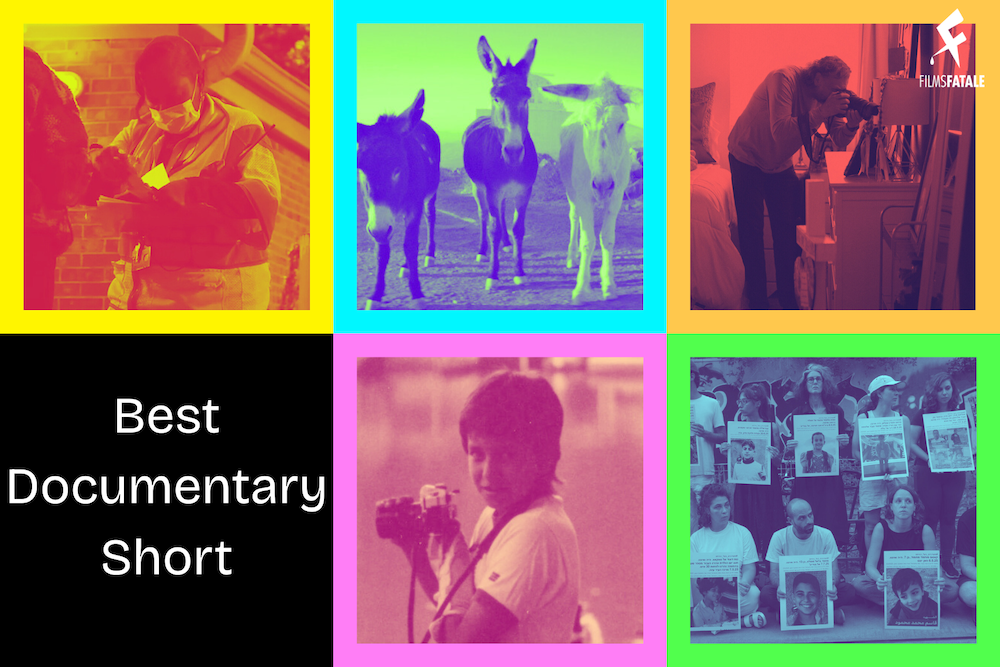
We have reached all of the Academy Awards that honour entire films — both short and long. Today, I am lumping both documentary categories together, and I will say that it is a fairly decent year for documentary nominees. I find that you might find a slog or two in either the short or feature groups, but that isn’t the case this year. What appears to be two consistently strong group of nominees this year, there aren’t many documentary selections that will completely change your life (contrary to what I said about duller years, some years can be unimaginably stacked with documentary nominees) but I don’t think you will have any issue watching what we do have (well, except for maybe one title; more on that shortly). We will start with the documentary short films, where you will find conversational pieces whose filmmakers likely didn’t have the wherewithal to make feature length studies; they make the most with what they have (to be fair, not every documentary subject deserves to be a feature-length film, either). I find that these short subject films are great methods of spotlighting concepts or the starts of discussions more than trying to solve anything, and they can help bring attention to key matters. When I went through all of the shortlisted short films, I liked most of the fifteen honourees quite a bit, and three of the final five films ranked quite highly on my personal list (including the number one pick), so the Academy did quite a good job this year (the final shorts lists can feel like a crap shoot to predict or even see eye-to-eye with; more on that with the animated shorts tomorrow). I always preface any major discussion about documentaries by stating that my placements are not based on political opinion but, rather, how strong these films are simply as films. Here are your nominees for Best Documentary Short Film, ranked from worst to best.
5. Perfectly a Strangeness
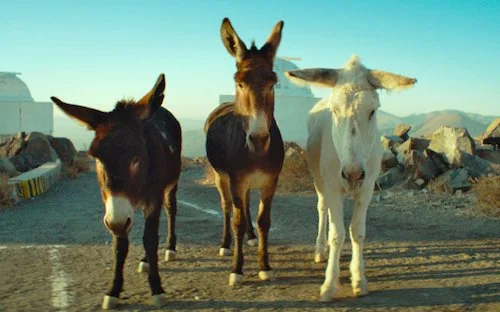
I actually really like this film, and I can understand the stretching of the definition as to what a documentary can be (I bend the rules quite a bit in my list of the greatest documentary features of all time). The biggest question is: is Perfectly a Strangeness actually a documentary film? We see three donkeys traversing through the Atacama Desert in Chile, and their silent pilgrimage sees them stumbling upon an abandoned observatory; their discovery of innovation is long abandoned by the human race who have moved on to other things. The donkeys “learn about” the vastness of time and space in this artistic short. I understand that many documentaries are coerced by directors or filmmakers into proving points they set out to make, but Perfectly a Strangeness is a documentary in the barest sense. It still feels orchestrated enough to feel more like, say, an experimental or art film. I find this short beautiful and allegorically sound, but it is also a little simplistic with what it is saying in regards to humanity’s relationship with nature, technology, and the unknown. This short just feels like a thought-provoking idea more than a fully realized statement. It is alluring, sure, and I do love donkeys (they are adorable animals who break my heart, given that they are often used as symbols for the lower and working classes in films — and also because they are precious creatures). However, I am seeing a lot of discourse surrounding this film and I can see why; this won’t be for everyone, and it may bother those who are highly traditional with what they consider to be documentary films. I consider it one, but an overtly basic one when it is clearly meant to challenge you.
4. The Devil is Busy
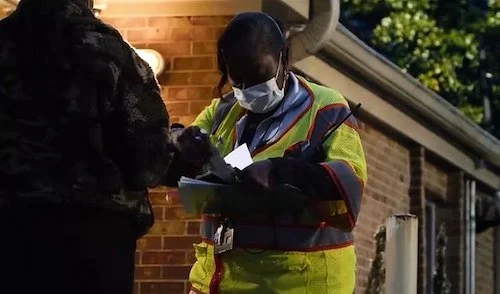
The Devil is Busy is what I call a snapshot documentary short: one where it says enough just by providing a brief perspective on a key political talking point. Here, we spend a day with Tracii: the head of security at a women’s care facility in Atlanta that can provide abortions for those who need or request them. Naturally, this brings up the pro-life versus pro-choice debate, and you can expect as such in both this film and Tracii’s everyday life. We see the health specialists and their routines as well, including the protocols necessary to make sure the staff will be safe in the face of protesters and those willing to personally attack the staff members for their professions. A major twist in this film for me was who on the staff identified as Christian — showcasing that even those who are religious can support those who need abortions (or at least allow them the right to choose). As you can expect, The Devil is Busy provides a perspective on this necessity after the manipulative, atrocious choice to overturn Roe v. Wade. I love that the film is a crisp half-hour in length, is direct with what it wants to say about the healthcare system and the sacrifices made by many of its practitioners, and how you can only imagine what this reality is like across America (this is only a solitary instance, and we learn quite a lot from The Devil is Busy).
3. Children No More: Were and Are Gone
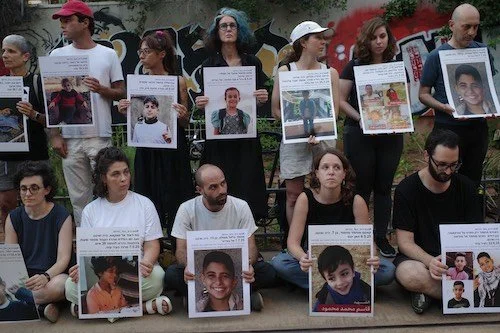
They say that pictures are worth a thousand words; so, what are a thousand pictures worth? Children No More: Were and are Gone is less an explicit documentary and more a stance in solidarity with its subjects: Israeli activists who are at the end of their rope with what is happening on the Gaza Strip. These citizens hold photographs of slaughtered children and place themselves in Tel Aviv to undergo silent protests; this vigil started back in March of 2025; a film like Children No More encourages such a stance to continue until the bloodshed stops. If you are wanting to learn more about this subject or the ongoing vigils, Children No More won’t really educate you on these topics; it is, instead, a display of these protests more than anything. However, I watch enough minimalist cinema to get the most out of thirty-five minutes of seeing photographs of innocent children who lost their lives to a genocide that they had no say in. While I feel like each minute says the same thing as the last, each photograph of a new, cheerful, young face feels like a stab in the heart: these are all lives we don’t know and will never get to know.
2. Armed Only With a Camera: The Life and Death of Brent Renaud
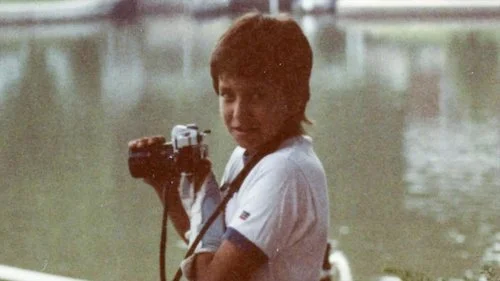
Russia’s invasion of Ukraine has seen a lot of bloodshed (this is the understatement of the century). What a film like Armed Only With a Camera: The Life and Death of Brent Renaud hopes to achieve is putting a face to such devastation — people love to toss around the Joseph Stalin quote “One death is a tragedy; a million is a statistic,” but we should forever remind ourselves that each life contains a million multitudes and we cannot boil down the scope of such slaughter (on the contrary, millions of deaths, obviously, are an immeasurable apocalypse). We follow American photo journalist Brent Renaud who planted himself in Ukraine and was killed on assignment (he also reported in numerous other events, like the earthquake in Haiti, and the sociopolitical conflicts in Somalia). He worked with his brother, Craig, who did whatever it took to honour his fallen sibling and bring back Brent’s footage from Ukraine. The end result is Armed Only with a Camera: an argument of the importance of visual journalism during a time of digital censorship and fake news (in a reality where much information is obfuscated or hidden, there are truth-tellers who sacrifice their lives to get these messages out). Armed Only With a Camera is a tribute to a brother, a warning to every viewer, and the spreading of awareness of the severity of many events that wind up only being clickbait headlines on our feeds; it is bittersweet to see Craig Renaud finish his brother’s mission in such a way.
1. All the Empty Rooms
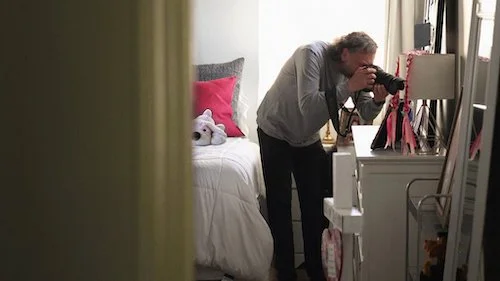
I can tend to dread visiting the Documentary Short Film nominees each year because you can find many questionable choices or so-so shorts (that feel never ending, even at forty-minutes-or-less). However, this year’s nominees are an impressive selection. Even so, the documentary short that shook me the most was All the Empty Rooms. Similar to what Children No More: Were and are Gone does with the photographs of deceased children at the hands of warfare on the Gaza Strip, All the Empty Rooms brings us into the bedrooms of kids who died during school shootings. Television correspondent Steve Hartman spent seven years visiting the rooms of these poor children; their spaces are, naturally, left untouched by their parents. These vessels of grief become installations in All the Empty Rooms: the silence within these four walls is deafening; all of the innocent toys, the lonely furniture, and the stationary trinkets speak volumes to soften the quiet. We can almost feel the spirits of these children in the places that used to be their favourite spots on Earth: their bedrooms. They were never able to come back to them and feel safe at home, and they were unaware that they would leave this comfort for one last time those tragic days. All the Empty Rooms hit me like a ton of bricks. Sometimes, not saying anything can prove more of a point than trying to make sense of it all. How could such monstrosity exist in the world: the kind that kills children who have barely had even a taste of life yet? All the Empty Rooms doesn’t try to answer anything. It simply does its best to introduce us to the fallen in the ways that they would best express themselves: their interests, favourite colours, and things that brought them joy.
Who I Want To Win: This is a tough one. I don’t hate — or even dislike — any of these shorts and would be fine with any of them winning. I will be rooting for All the Empty Rooms, mind you.
Who I Think Will Win: Predicting the short film categories always feels like random guessing, unless there is a clear winner via popularity or quality (like when Disney’s Paperman won in 2013). So far, the two most popular films seem to be All the Empty Rooms and Armed Only With a Camera: The Life and Death of Brent Renaud. However, I must point everyone’s attention to Perfectly a Strangeness, which has won quite a few awards already (at the Chicago International Film Festival, TIFF’s Canada’s Top Ten lineup, Miami Short Film Festival, and more). I now it is the least popular film online, but I do believe such a different documentary short got this far for a reason; do not count the donkeys out (they made it as far as the observatory — who is to say they cannot reach the Oscars’ stage?). My thoughts may change closer to the big ceremony, but, for now, given the discourse surrounding the Russo-Ukranian war, I will predict Armed Only With a Camera to win here.


Andreas Babiolakis has a Masters degree in Film and Photography Preservation and Collections Management from Toronto Metropolitan University, as well as a Bachelors degree in Cinema Studies from York University. His favourite times of year are the Criterion Collection flash sales and the annual Toronto International Film Festival.